Training & Work by Easy Diplomacy: a structured and sustainable response to businesses’ operational needs
Rome, 17 march 2026

The Italian and European Labor Market: Current Situation
The labor market in Italy and across Europe is currently undergoing a period of significant instability and transformation. According to Eurostat data, in 2024 the employment rate in EU countries reached approximately 75.8% among people aged 20 to 64, marking an increase compared to previous years. However, Italy ranks among the countries with the lowest employment levels in the Union, with a rate of around 67.1%, well below the EU average.
This dynamic reflects not only a labor market with lower employment levels compared to the EU average, but also structural difficulties in finding skilled labor, especially in sectors that currently experience high turnover or shortages of competencies.
Sector Most Affected by Turnover and Labor Shortages
- Construction and building: Active construction sites and constantly rotating projects require bricklayers, carpenters, electricians, and floor installers. The difficulty in finding specialized technical staff leads to delays and increased costs.
- Tourism and hospitality: Characterized by strong seasonality, peak demand periods create pressure on the availability of qualified staff, from front-office personnel to waiters and receptionists.
- Healthcare and assistance: Healthcare and social care facilities struggle to find qualified workers such as care assistants and healthcare support workers, with direct consequences on service quality.
- Security and personal services: Professionals in security and personal services require updated technical and regulatory skills, which are often difficult to find locally.
- Retail and logistics: Demand variability requires flexible personnel with operational and logistical skills, able to quickly adapt to seasonal or promotional peaks.
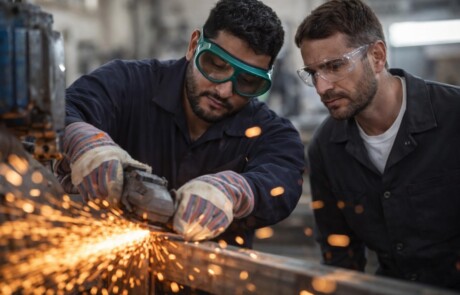
- Metallurgical sector and welding: The shortage of qualified welders and specialized operators limits companies’ production capacity, causing delays in orders and difficulties in managing production.
This situation highlights the urgent need for tools that enable fast, qualified, and compliant workforce integration, such as those offered by the Training & Work project by Easy Diplomacy, which operates in synergy with Italian institutions and international organizations active in labor mobility.


Why Foreign Labor is an Opportunity? Which Countries? And Why?
In a European context marked by demographic aging, a shrinking working-age population, and increasing demand for technical skills, foreign labor is no longer just a necessity but a strategic opportunity for companies.
Many Italian productive sectors—ranging from construction to logistics, tourism to healthcare—are facing increasing difficulties in finding qualified personnel in the domestic market. In this scenario, activating international labor mobility channels allows companies to access new human resources while also contributing to economic development and cooperation between countries.
Among the countries with strong potential in terms of availability of skilled and motivated workers is Bangladesh, one of the most dynamic emerging economies in South Asia. It is characterized by a young population, a growing spread of technical education, and a well-established tradition of working abroad.
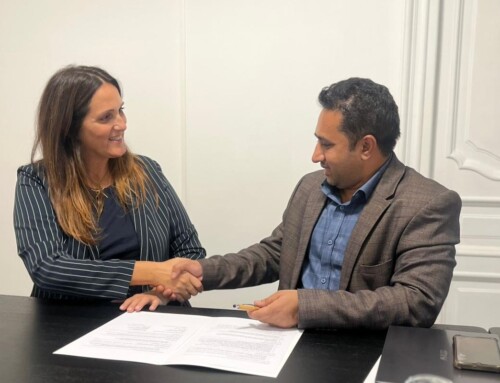
An important step in this direction is represented by the Memorandum of Understanding on Migration and Mobility between Italy and Bangladesh, signed on May 6, 2025. This agreement aims to strengthen bilateral cooperation by promoting regular, safe, and legal migration channels, responding to the labor needs of the Italian production system while enhancing vocational and language training programs aimed at job placement.
Bangladesh also represents a cultural context in which working abroad is considered an important factor for economic and social growth, with a workforce generally recognized for reliability, adaptability, and strong work ethic.
In this framework, structured programs for training and labor mobility—such as those promoted by Easy Diplomacy – make it possible to transform economic migration into an organized, ethical, and sustainable process, generating benefits for both European companies and the workers involved.
How does the entry of foreign workers into Italy Work? Is the “Decree Flows” the only channel?
The entry of foreign workers into Italy is mainly regulated by the Consolidated Immigration Act (Legislative Decree 286/1998) and a set of administrative tools governing access to the labor market for non-EU citizens.
The best-known mechanism is the “Flow Decree,” an annual measure through which the Italian Government sets the maximum number of foreign workers allowed to enter the country for subordinate, seasonal, or self-employment. Companies must submit a named application for the worker, and once authorization is granted, the worker can apply for a visa at the Italian embassy in their country.
However, the Flow Decree is not the only available channel and, in the context of job placement, it is often the least effective.
In recent years, complementary tools have been developed to enable a more structured management of international labor mobility, including:
• Vocational training programs in countries of origin aimed at employment in Italy
• International internship programs that allow companies to train and evaluate workers before permanent hiring
• European cooperation and professional mobility programs, often supported by EU funds.
These tools help overcome some of the rigidities of the traditional system, enabling more planned, larger-scale, and higher-quality workforce integration.
Moreover, the initiative starts directly from the company: the process is activated through a company invitation letter, not by the prior presence of the worker in Italy. In this context, tools such as dedicated platforms, video CVs, and customized pre-interviews are becoming increasingly common, allowing companies to identify and select candidates directly in their countries of origin.
Training & Work: A Structured Solution for Business Needs
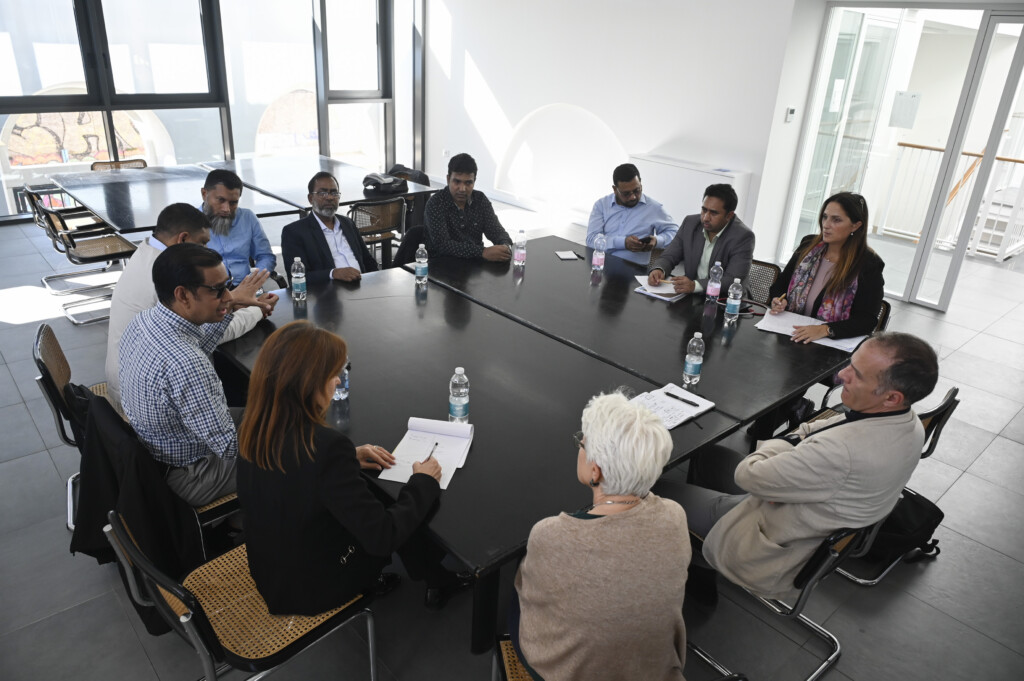
To address these challenges, Training & Work – Ethical Manpower Business was created, a project developed by Easy Diplomacy in collaboration with local partners (such as in Bangladesh) and with the involvement of relevant Italian authorities. Its goal is to support Italian and European companies in managing the entire process of integrating qualified foreign workers.
This model coordinates every phase of the process:
• Targeted selection of professional profiles
• Language and technical training through certified institutions
• Administrative and documentation management, including visas, residence permits, and internships
• Coordination with institutions and authorities to ensure compliance and legality
The project helps companies overcome bureaucratic barriers, training gaps, and long waiting times, enabling productive and sustainable workforce integration.
Added Value: Ethics, Sustainability, and Institutional Dialogue
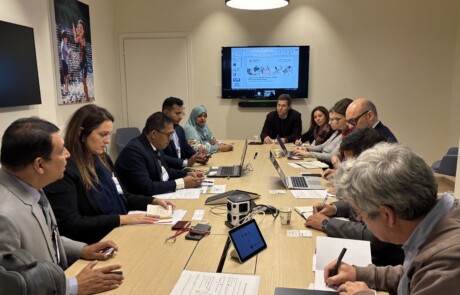
Easy Diplomacy stands out for its ability to maintain continuous dialogue with Italian and European institutions.
With over 15 years of international experience, the team operates with an approach focused on internationalization and intercultural management, collaborating with embassies, consulates, and government authorities.
Its role is twofold:
1. Building connections with institutions to ensure regular, ethical, and sustainable pathways
2. Operational coordination between companies, local partners, and certification bodies to simplify procedures and reduce time and costs
The result: compliant, fast integrations and workers ready to perform from day one.
Why Acting Now Is Crucial
In a market marked by a shortage of skilled labor and high turnover, companies cannot afford delays. Traditional solutions often fail to meet operational timelines and business needs.
Training & Work offers a concrete and immediate solution to ensure:
✔ Fast integration of qualified workers
✔ Full compliance with Italian and European regulations
✔ Professionalism and productivity from day one
✔ Access to European funds (such as the European Social Fund) and interprofessional funds (such as Fondo Sistema Impresa) to optimize investments in training and workforce integration
How does it work?
Companies can contact our professionals with no obligation to define their needs: number of workers required, professional qualifications, and type of contract.
The entities responsible for recruitment and staffing will present a selection of already trained profiles—or profiles to be trained according to company needs—ready for employment in Italy. Companies will have the opportunity to meet and evaluate candidates before their departure, also through digital tools and preliminary interviews.
The entire process and coordination among all stakeholders is managed by Easy Diplomacy, offering a turnkey service through a dedicated mandate.
Timeline: between 90 days and 6 months, depending on the type of contract and any training pathway required.
Is your Company interested?
- Which sector does your company operate in?
- Which professional profiles are you looking for?
For more information and to activate a customized project, contact NOW the dedicated professionals:
📞 Phone: +39 06 32609220
✉️ Email: training@easydiplomacy.com | segreteria@easydiplomacy.com
🔗 Learn more about the Training & Work – Bangladesh project: click here